Monthly Archives: July 2015

urieTND50 years later, recalling a founder of Head Start                                                                          A half century ago, Cornell developmental psychologist Urie Bronfenbrenner gave Congressional testimony that eventually led to the creation of the Head Start program.
Language-loss study reveals early signs of AAlzheimersWord_465x170lzheimer's disease                                               Loss of early childhood language skills, rather than those skills attained later in life, might be a predictor for Alzheimer's disease, according to a new Cornell study.

Ceci-TND70x70Stephen Ceci elected to National Academy of Education                                             Stephen Ceci, Cornell’s Helen L. Carr Professor of Developmental Psychology, has been elected to the National Academy of Education for his outstanding scholarship on education.

Chancel Award Metal18 Cornellians win SUNY Chancellor's Awards for Excellence                                    Eighteen students, faculty and staff in Cornell's contract colleges have won State University of New York (SUNY) Chancellor's Awards for Excellence for 2015.
Chinese_flag_(Beijing)_-_IMG_1104Lehman Fund makes 10 awards for China Study                                                                           Fourteen Cornell scholars received 2015 awards from the Jeffrey S. Lehman Fund for Scholarly Exchange with China. 
older people dancingPrevailing over pain                                                                                                                               Human Ecology's Translational Research Institute for Pain in Later Life, received a $1.95 million grant from National Institute on Aging.
Anthony BurrowAnthony Burrow among faculty saluted by OADI
Cornell’s Office of Academic Diversity Initiatives held its second annual awards, named after George Washington Fields and 9 other Cornellian trailblazers.

Students in the News

Anna Zhu Smart choice:  Award-winning app connects patients and hospitals
Department of Human Development graduate, Anna Zhu '14, developed an app to help patients find the hospital that best matches their health needs.
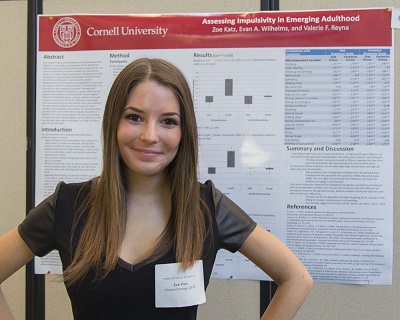
great minds 3.400HD Students present their research at 30th CURB forum
HD students were among the 120 undergraduates who presented their research at Duffield Hall as part of the annual event hosted by the Cornell Undergraduate Research Board (CURB)

 More Stories

Why Americans are obsessed with telling their own stories
Focus on protecting elderly from fraud and fleecing
A five-step guide to not being stupid
How courts should hear from children
The myth about women in science
> How children develop the idea of free will

 New Resources
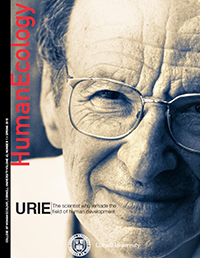
Urie mag_cover_200x258
Urie: The scientist who remade the field of human development                                                                     Fifty years after the launch of Head Start, Urie Bronfenbrenner-one of the architects of the federal program for underserved families-is remembered as a giant in his field. Former students, research partners, and Cornell faculty members share their thoughts on the late Bronfenbrenner's legacy as a scholar, mentor, researcher, and champion for youth and families. Also in this issue: A tour through 150 Years of Big Red fashion; gerontologist Karl Pillemer's latest book, sharing elder wisdom on love and marriage; long-running, legendary courses in the College of Human Ecology; alumni and campus updates and special sesquicentennial content.
> The Memory Factory
 

oadi460
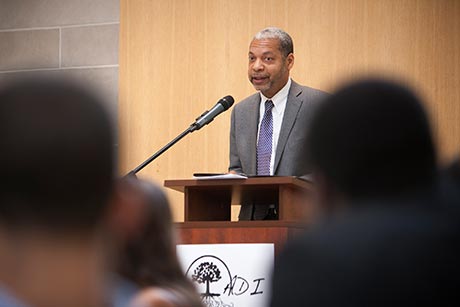
Lance Collins, dean of the College of Engineering, speaks at the second annual Office of Academic Diversity Initiatives Honors Award Ceremony May 1. (Lindsay France/University Photography)


In 1890, ex-slave George Washington Fields became the first African- American to graduate from Cornell Law School. Nearly 125 years later, the Office of Academic Diversity Initiatives (OADI) continues to celebrate diversity at Cornell with a series of awards named after Fields and nine other Cornellian trailblazers.

More than 70 people gathered May 1 for the second annual OADI Honors Awards Ceremony. Student presentations, a dinner reception and musical performances kicked off the event, which highlighted accomplishments and contributions of some of Cornell’s most talented scholars and leaders.

OADI is pronounced “wadi,” which is an Arabic and Swahili word for a cool, protected passage through a desert, often formed by a seasonal river. OADI was formed in 2011 as part of an initiative to provide support and mentorship to Cornell students who come from historically underrepresented backgrounds.

“These services play a crucial role in fulfilling Cornell University’s ‘any person, any study’ motto,” said Carlos Gonzalez, executive director of OADI.

Engineering Dean Lance Collins gave the keynote address for the awards ceremony. The first African-American dean at Cornell, Collins shared his insights on the role of diversity in the three core pillars of academic excellence: scholarship, leadership and community engagement.

Collins encouraged the audience to seek mentors and to mentor others, to lead by inspiring others to take action, and to work for results rather than recognition.

Collins also emphasized the importance of thinking about diversity not only as a social justice issue, but also in terms of the inherent value that it brings to society. “We are a pluralistic society, and there is great power and strength in that,” he said. “Each of you in the audience brings something special and unique and positive, adding to the excellence of this institution.”

OADI presented 10 awards named after some of Cornell’s most inspiring trailblazers that recognized achievement and excellence of scholar-leaders and campus partners. This year’s recipients were:

  • Andrew Martinez '12, assistant dean of students, 626 Center for Intercultural Dialogue – Ryokichi Yatabe Award for Outstanding Alumna/Alumnus Partner.
  • Anthony Burrow, assistant professor, human development – Estevan Fuertes Award for Outstanding OADI Faculty Partner.
  • Angel Keen, assistant director, Diversity Programs in Engineering – Tomás Bautista Mapúa Award for Outstanding OADI Staff Partner.
  • Zarif Islam, M.P.S. candidate – Toni Morrison Award for Outstanding Graduate Mentorship.
  • Scholars Working Ambitiously to Graduate (SWAG) – Club Brasileiro Award for Outstanding Organization.
  • Kemar Prussien '15 – Solomon Cook Award for Engaged Research and Scholarship.
  • Rachel Reindorf '16 – George Washington Fields Award for Professional Development.
  • Andrea Kim '12– Gloria Joseph Award for Opportunity Programs Students.
  • Allison Arteaga '18 – Marvin Jack Award for OADI Emerging Scholar-Leader.
  • Misha Inniss-Thompson '16 – Jerome Holland Award for Outstanding OADI Scholar-Leader.

Thaddeus Talbot '15 was selected as the student speaker for the awards ceremony. Earlier this year, Talbot marched in Selma, Alabama, to commemorate the 50th anniversary of the 1965 voting rights marches from Selma to Montgomery.

“Tonight is all about taking risks and the rewards that follow,” said Talbot.

 Josephine Engreitz ’15 is a writer intern for the Cornell Chronicle.

Reprinted from Human Ecology Magazine, Spring 2015

Human Ecology's Translational Research Institute for Pain in Later Life, a New York City-based center that helps older adults prevent and manage pain, received a five-year, $1.95 million renewal grant from the National Institute on Aging.

TRIPLL unites social and psychological scientists at Cornell's Ithaca campus and Bronfenbrenner Center for Translational Research, researchers at Weill Cornell Medical College, and community-based health care practitioners to study innovative, nonpharmacological methods to ease persistent pain.

In its first five years, TRIPLL funded 30 pilot studies on innovative treatments, protocols, and interventions for improved pain management. With the grant renewal, TRIPLL adds a focus on behavior change science, seeking to apply insights from psychology, sociology, economics, and communications to develop optimal pain management techniques.

Fourteen Cornell scholars (11 faculty members and one faculty member-graduate student team) received 2015 awards from the Jeffrey S. Lehman Fund for Scholarly Exchange with China. The fund provides grants to initiate research projects, sponsor research-related conferences or workshops, host visitors from China or support faculty travel to China to work on collaborative research projects.

Projects and winners are:

  • Integrating Eastern and Western Medicine to Address Iron Deficiency In Rural Chinese Women. Project director: Laura Pompano, doctoral candidate in the field of nutritional sciences, and Jere D. Haas, the Nancy Schlegel Meinig Professor of Maternal and Child Nutrition, Division of Nutritional Sciences;
  • Manufacturing Revolutions: The Socialist Development of a Chinese Auto-Industrial Base. Project director: Victor Seow, assistant professor, Department of History;
  • Chinese Medicine and Healing: Translating Practice. Project director: TJ Hinrichs, associate professor, Department of History;
  • China/Cornell Media Arts Exchange Program. Project director: J.P. Sniadecki, assistant professor, Department of Performing and Media Arts;
  • Constructing the Autobiographical Self in Cyberspace. Project director: Qi Wang, professor, Department of Human Development;
  • Inflation, String Theory, and Cosmic Strings. Project directors: David Chernoff, professor, Department of Astronomy, and Liam McAllister, professor, Department of Physics;
  • Conference and Publication on Feminist Jurisprudence in Shanghai. Project director: Cynthia Grant Bowman, the Dorothea S. Clarke Professor of Feminist Jurisprudence, Law School;
  • Ricci Flow on 4manifolds and Applications. Project director: Xiaodong Cao, associate professor, Department of Mathematics;
  • Beijing Film and Digital Media Initiative. Project directors: Tim Murray, director, Society for the Humanities, and Amy Villarejo, chair, Department of Performing and Media Arts;
  • Creating China? Transnational Public Intellectuals and the Making of Contemporary Chinese Politics and Foreign Relations. Project director: Allen Carlson, associate professor, Department of Government.

For more information, contact the East Asia Program in the Mario Einaudi Center for International Studies at cueap@cornell.edu.

Students, faculty and staff in Cornell's contract colleges have won State University of New York (SUNY) Chancellor's Awards for Excellence for 2015.

Faculty and staff recipients of the award have served their campuses and communities with distinction. Students were honored as leaders, role models and volunteers, and for their academic achievements.

Those honored this year are:

  • Excellence in Faculty Service: Carol Devine, professor of nutritional sciences, College of Human Ecology (HE); Mark Sorrells, plant breeding and genetics, College of Agriculture and Life Sciences (CALS).
  • Excellence in Professional Service: Lars Angenent, biological and environmental engineering, CALS; Ann LaFave, CALS Office of Academic Programs; Thomas O’Toole, executive director, Cornell Institute for Public Affairs, HE.
  • Excellence in Scholarship and Creative Activities: Charles Brainerd, professor and chair of human development, HE.
  • Excellence in Teaching: Anthony Burrow, assistant professor of human development, HE; Jeffrey Niederdeppe, associate professor of communication, CALS; M. Todd Walter, associate professor, biological and environmental engineering, CALS.
  • Student Excellence: Alexa Bakker ‘15, science of natural and environment systems, (CALS); Katherine Bibi, DVM ‘15, College of Veterinary Medicine; Emily Clark ’15, policy analysis and management, CALS; Atticus DeProspo ‘15, industrial and labor relations (ILR School); Owen Lee-Park ’15, human biology, health and society (HE); Rachel Harmon ‘15, industrial and labor relations (ILR); Aaron Match ‘15, atmospheric science (CALS); Patrick Satchell, DVM ’15, veterinary medicine; and Maia Vernacchia ‘15, food science (CALS).

Remember HAL, the onboard computer in “2001: A Space Odyssey,” struggling to sing “Daisy, Daisy…” while astronaut Dave disables older and older memory modules until just one shred of HAL’s artificial intelligence remains?

Who could forget … except that’s not how language loss really happens to humans on the verge of Alzheimer’s disease, according to a team of psychologists and linguists with a paradigm-flipping test to predict the disease.

“It is now known that Alzheimer’s disease may develop for years, silently, before appearance of symptoms leading to clinical diagnosis,” explains Cornell’s Barbara Lust. “We’re searching for early signs in the spoken language of individuals, before Alzheimer’s is actually manifest.”

Together with research collaborators at Cornell and three other institutions, Lust published surprising findings in the April journal Brain & Language, “Reversing Ribot: Does regression hold in language of prodromal Alzheimer’s disease?”

Theodule Ribot was the 19th-century French psychologist who proposed a law of regression or reversion - essentially that “structures last formed are the first to degenerate ... the new perishes before the old.” Ribot’s law predicts what is often observed in Alzheimer’s patients, that recent memories may be lost before older memories.

The new study inquired whether there are also changes in language that occur during the prodromal course of Alzheimer’s disease – changes that possibly could be predictors of the disease. Prodromal refers to the period before appearance of initial symptoms and the full development of disease. The stage of prodromal Alzheimer’s, before dementia sets in, is called Mild Cognitive Impairment or MCI.

The researchers asked whether the course of language deterioration in prodromal Alzheimer’s would systematically reverse the course of acquisition of language among children, in accord with Ribot’s prediction.

The study compared earlier research – on the course of language development of complex sentences in children under age 5 – with new research assessing language patterns of MCI adults.

Researchers also tested young adults and healthy aging adults. Adults were asked to imitate sentences with complex structures, including various types of relative clauses, just as the children had.

As hypothesized by the researchers – but contrary to common belief – the linguistic structures children develop first are the ones MCI adult subjects struggle with the most.

For example, individuals with MCI found it more difficult to repeat a sentence like, “The office manager corrected what bothered the summer intern,” often giving responses like “The officer ... uh ... inspected ... and um ... corrected the intern.”

For children, sentences like “Fozzie Bear hugs what Kermit the Frog kisses” were the earliest produced. Whereas sentences like “Scooter grabs the candy which Fozzie Bear eats” were late-developed by children – but easiest for MCI adults.

In MCI, a first-developed structure is being lost first and a last-developed structure is being retained longest – contrary to Ribot’s prediction ... and HAL’s experience.

Next, researchers hope to incorporate linguistic assessments into potential predictive tests for early-stage Alzheimer’s, as they further test their results with additional subjects for verification.

Collaborating with Lust, a professor of human development in the College of Human Ecology, were Cornell senior research associate Charles R. Henderson, Jordan Whitlock ’11, Alex Immerman ’08, Aileen Costigan and James Gair, professor emeritus of linguistics. Collaborators from other institutions were Suzanne Flynn, M.A. ’80, Ph.D. ’83, Massachusetts Institute of Technology; Janet Cohen Sherman, Ph.D. ’83, and Sarah Mancuso, Massachusetts General Hospital; and Zhong Chen, Rochester Institute of Technology.

Research was funded, in part, by Hatch Grants and Federal Formula Funds, as well as grants from the Bronfenbrenner Center for Translational Research, Cornell Institute for Translational Research on Aging, and Cornell’s Institute for the Social Sciences.

rx12-16-TND 70x70Fuzzy reasoning by patients may lead to antibiotic resistance
Valerie Reyna's "fuzzy-trace" theory explains why patients demand antibiotics even though they may be suffering from a virus.
Ethics12-8-TNDBook urges scientists to wrestle with ethical dilemmas
A new book edited by Cornell psychologist Robert Sternberg, “Ethical Challenges in the Brain and Behavioral Sciences: Case Studies and Commentaries," offers real-world case studies.

elderabuse11-10-TND (1)Elder-to-elder abuse is common in nursing homes
Nearly one in five nursing home residents in 10 facilities across New York state were involved in at least one aggressive encounter with fellow residents during the four weeks prior to a study by researchers at Cornell and Weill Cornell.

ISSgrants12-4-TNDInstitute for the Social Sciences supports faculty research
Institute for the Social Sciences grants support several faculty research projects in human development, government, communication, engineering and anthropology.
 Karl PillemerKarl Pillemer to lead Bronfenbrenner Center
Cornell gerontologist Karl Pillemer will become director of the Bronfenbrenner Center for Translational Research Jan. 15, taking over for John Eckenrode, who has been the center's director since it was founded in 2011.
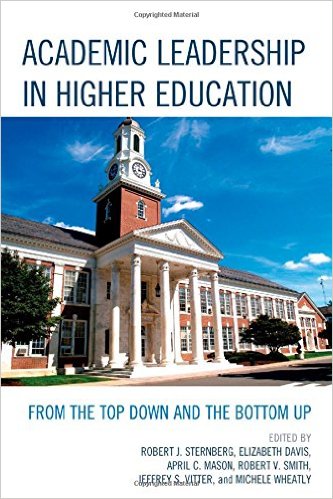
 51CH6HgCPmL__SX331_BO1,204,203,200_Book offers advice for and by academic leaders
The new book "Academic Leadership in Higher Education: From the Top Down and the Bottom Up," co-edited by Cornell professor Robert Sternberg, offers advice for new faculty administrators.

Students in the News

young couple Trenel Francis '16 analyzes 'hook-up culture'
While many college students may be familiar with the idea of “hooking up” as a routine social interaction, Francis analyzed the phenomenon more closely in a study she performed last summer with the University of Cincinnati.

 More Stories

The hidden power of the experienced mind

 New Resources

Elaine Wethington on Cities and the Life Course