Developmental psychologist Charles Brainerd to receive APA award
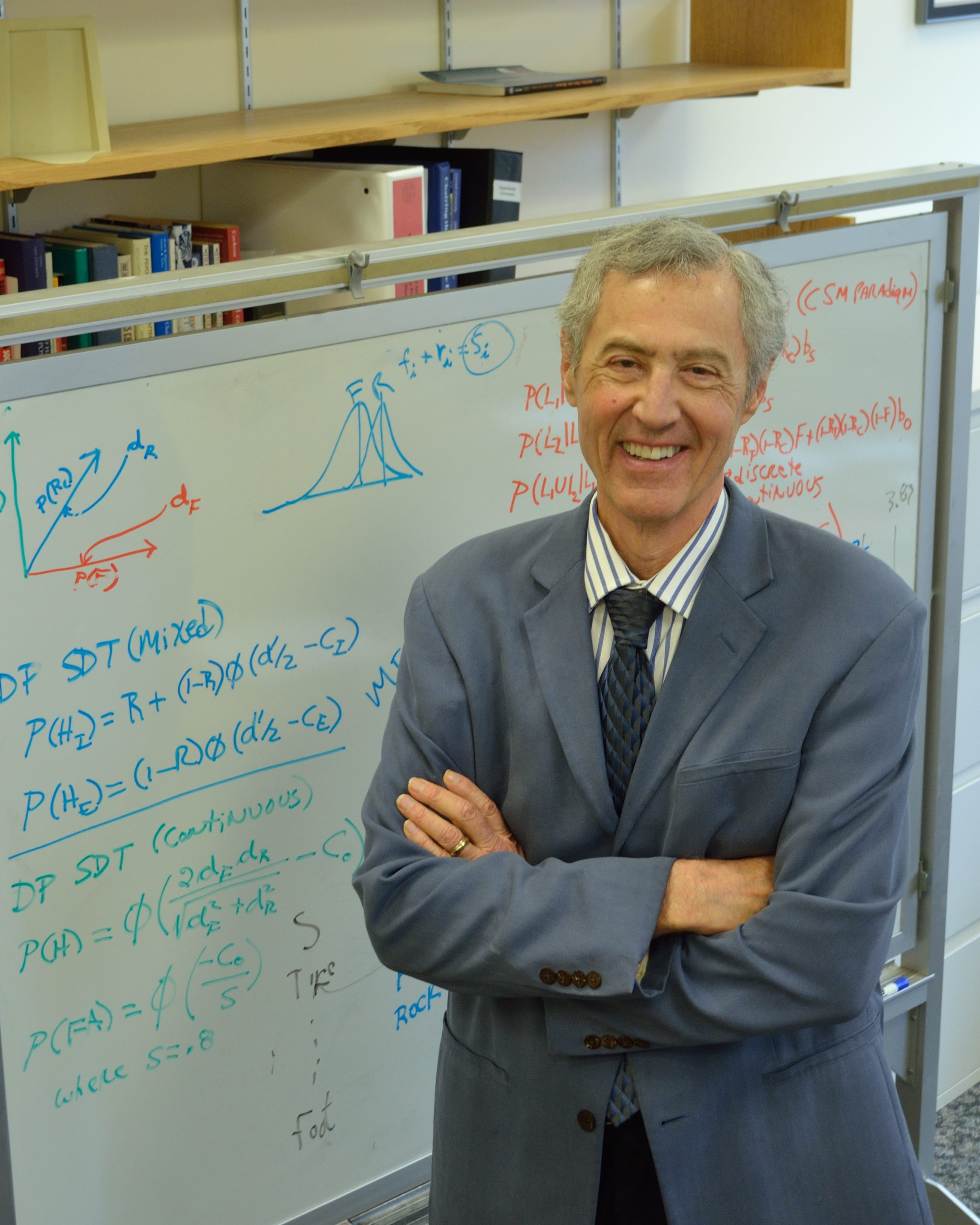
Charles Brainerd, professor of human development and human neuroscience, will receive the American Psychological Association’s G. Stanley Hall award for distinguished contributions to developmental science at the APA’s August 2019 meeting in San Francisco.
Regarded as the highest honor in the field of developmental psychology, the award is given to an individual or research team who has made distinguished contributions to developmental psychology in research, student training and other scholarly endeavors.
Brainerd’s research has had an impact on educational, developmental and cognitive psychology, and he is credited with major breakthroughs across his theoretical and empirical work.
“Chuck has done groundbreaking work in human memory and reasoning through experimental behavioral methods, mathematical models and neuroscience techniques,” said Qi Wang, professor of human development and department chair. “He co-developed fuzzy-trace theory of memory, judgment and decision-making that has been widely applied in the law and in medicine. His work exemplifies the best integration of theory-driven experimentation and evidence-based translational research.”
According to the APA, the award is based on the scientific merit of the individual’s work, the importance of this work for opening up new empirical or theoretical areas of developmental psychology, and the importance of the individual’s work linking developmental psychology with issues confronting society or with other disciplines.
Brainerd’s current research centers on the relationship between memory and higher reasoning abilities in children and adults, also focusing on false-memory phenomena, cognitive neuroscience, aging and neurocognitive impairment.
He has published more than 300 research articles and chapters and more than 20 books. His research covers human memory and decision-making, statistics and mathematical modeling, cognitive neuroscience, learning, intelligence, cognitive development, learning disability and child abuse.
Brainerd has been elected to the National Academy of Education; is a fellow of the Division of General Psychology, the Division of Experimental Psychology, the Division of Developmental Psychology and the Division of Educational Psychology of the American Psychological Association; and is a fellow of the American Psychological Society.
The editor of the journal Developmental Review, Brainerd has served as associate editor for journals including Child Development and The Behavioral and Brain Sciences.
Brainerd’s win of the 2019 G. Stanley Hall Award immediately follows the 2018 win of Stephen Ceci, the Helen L. Carr Professor of Developmental Psychology in the Department of Human Development.
Stephen D’Angelo is assistant director of communications at the College of Human Ecology.


 Lin Bian
 One of the central goals in the establishment of the
 APS President Suparna Rajaram invited four distinguished psychological scientists to speak about memory from cognitive, neuroscientific, cultural, and developmental approaches as part of the Presidential Symposium at the 30th Annual APS Convention in San Francisco. Watch Qi Wang's presentation, "Studying Memory Development in Cultural Context: A Multi-Level Analysis Approach".



 Reload document
  Open in new tab



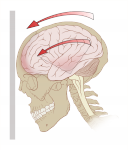 Garavito and undergraduates in the Laboratory for Rational Decision Making are working with a growing number of students, coaches, and administrators from high schools and colleges in New York (including Watkins Glen and Moravia high schools, Cornell University, and Ithaca College), Colorado, and Minnesota. Engagement with sports communities has provided the team with the opportunity to educate--and listen to-- the public about current research on concussions and how values or principles can affect perceptions and decisions about concussion risk. Garavito has found that coaches are very supportive of research projects that aim to help keep athletes safe and further knowledge about concussions. Many athletes have enthusiastically agreed to volunteer in Garavito’s studies. The student team also has been working with the Ithaca Youth Bureau and the experiences of coaches and educators at the center have been essential in the development of interactive activities to teach youth about the brain and concussions. The ultimate goal of the concussion intervention is to strengthen healthy values and educate people about risks, and the importance of reporting symptoms of concussions.